-
Blog_5 so tired of hearing about… but you need to.
Public Service Announcement
I’ve spent the last 6 months developing a process to create relevant K-20 learning opportunities and support educators who want to align their classrooms with real issues. My plan was to use AI to scrape the internet for peer reviewed, vetted science and current events, compile it into useable lesson plans and distribute to educators with professional support. After listening to Tristan Harris’ new “Call to Arms”, the AI Dilemma, my desire to protect children (and our future) has been reignited. Before we cast machine learning on our children we should come to some consensus about what is best (and notice what is the worst) technology for their wellness. As Harris points out, the movie The Day After was paramount in the dialogue around nuclear war and some would say it prevented attacks (in the day). I think it’s possible to do the same thing with AI (other than just play on OpenAI). As Dr. Maria Montessori would say, freedom (progress) comes with responsibility.
Private companies are attaching AI to their platforms in droves, even SnapChat has added an AI chatbot just in case your children don’t have any friends online when they want to chat. Sure, it’ll give your daughter all the positive reinforcement she wants, even if she is thirteen and considering her first romantic secret getaway with a thirty-one-year-old she just met online. Bad incentives (attention, money, power) are driving the race for AI everywhere we look and there is almost no one (~1/30 machine learning professionals are working in AI safety and most working within underfunded organizations) watching or considering if it is a good idea or all. Even though this video is now outdated (it launched twenty days ago) it is worth at least a listen. AI is a great tool in many areas, but it can be disastrous in others. It’s our duty as citizens to understand what we can and support what we must. Here are two more places to read more among many others.
Sign a petition to help correct some of the negative effects of social media on our children. Thank you dove. Hopefully, we’ll see one for AI sooner than later.
-
Blog_4 Literacy
Although my brother and I played Pong and eventually Atari as children, our mother’s concern for screentime in the 70’s was real. She noticed that it caused us to become zombies, and it took time away from books, play and chores. So, she would hide the power cord, the aux chord, or the rabbit ears TV antenna before going to work. My older and wily brother always found it and we snuck in an extra hour than we were supposed to, but we always went outside to play cops and robbers on our bikes and usually did some chores to help around the house.
Studying engineering at CU Boulder in the early 90’s was very exciting. We had multiple labs with computers named after music composers. We were using software, building programs (in Fortran & Basic) and building elaborate spreadsheets. But it was college, in Boulder, and I was 18… I wasn’t exceeding my screentime.
It wasn’t until I had my own children that I worried about screens again. My husband and I took the road less traveled by taking the Wait until 8th Pledge and allowing only a Kindle Fire. I had seen how the screen and games would affect their mood, shorten their attention span and took away from the benefits of reading, music, outside play among other things, yes, like chores. With heavy training, only now as sixteen- and eighteen-year-olds, they are “in charge” of their screen use, unless of course, it is abused, unsafe, unhealthy or getting in the way of other priorities (like reading, music and chores).
Having taught middle and upper school math in the early 2000’s and again a decade later, I’ve had to problem solve new ways to teach given the growth of technology. My goal was and will always be to engage students and help them build the stamina and confidence to problem solve.
With the alternative ways to gain knowledge, literacy has become the new math. It feels like I’m hearing that response of high school math students, “when am I ever going to use this?” Perhaps reading and literacy were always like math, but I took it for granted. It is problem solving and it takes work and time to achieve literacy where you can use, comprehend, manage, and analyze information safely, effectively, and responsibly.
I worry about how little (and how thorough) students appear to be reading. My kids have very few textbooks and when I inquired at school, the math department head said, “they are available”. Many colleges (and employers) are challenged when young adults can barely read and comprehend primary source documents. I wonder who is concerned about this and who is not, and why.
Although the National Assessment of Educational Progress (NAEP) has the largest cohort of student data from urban schools and is the only source of nationally representative results of twelfth-grade student achievement, I was disappointed about the number of schools participating (~3,000 schools out of ~24,000). Clearly there are many considerations, but when the organizations and institutions that follow K-20 education concur with the results, the data is increasingly validated. According to NAEP, two-thirds of U.S. high school students are unable to read and comprehend complex academic materials, think critically about texts, synthesize information from multiple sources, or communicate clearly what they have learned.
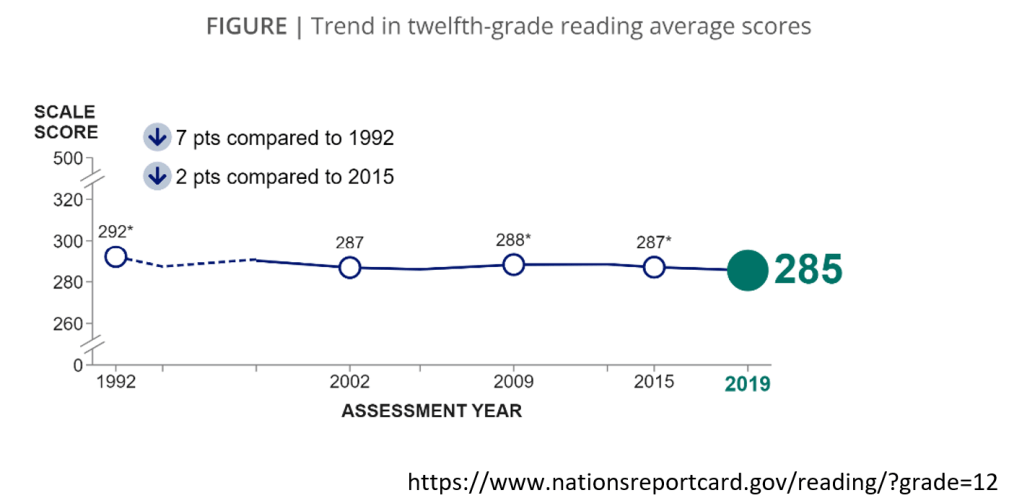
Do you think we are moving to a world where long term memory, attention, and deep comprehension (that comes from problem solving) is only needed for a small set of society? Who needs it? Who doesn’t? What does literacy look like with YouTube and AI? Can we gain agency without literacy? Is it possible to gain enough knowledge without literacy to build successful civic, professional, and social futures? As a GenXer, I don’t see an option for illiteracy, anywhere, what do you see?
-
Blog 3 -GRIT
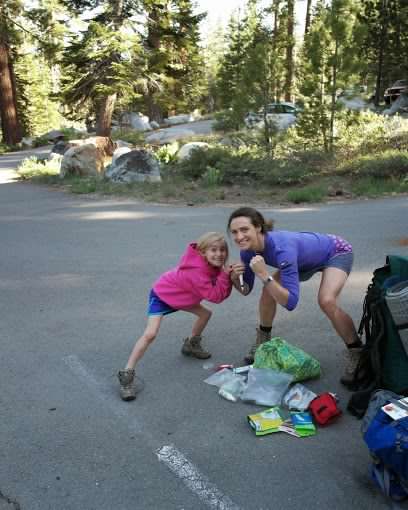
GRIT! Blog 3_grit
My physical response to epiphanies that are worth investigating is usually an emotional one. The latest thought that struck a chord had to do with grit, so I followed that for a bit. While you may want to read the work of Angela Duckworth for some legitimate research on Grit, I wanted to dive into my own thoughts around it. In the world of athletics, the act of making up for talent with effort has been widely admired. Many underdog athletes attribute their success to showing up early and/or staying late to get in some extra hours of training. This is true in the working world as well. I’m questioning this style as it pertains to career or vocation for the second half. How long should we muscle through and force a square peg into a round hole? Contemplative practices and eastern teachings suggest “softening into the pose”, working without straining.
As a child I watched (and hopefully helped) my single mother run a countryside household. She may have wanted companionship like every other human, but she didn’t need it to help with her 1/4-acre garden, our crazy car-chasing border collie or to keep the critters or even predators out. During visits with my father, it was most often project time: fixing a culvert during a rainstorm, removing old shakes from a roof, shoveling llama poop. Of course, my pre-tech (except for Atari and pong ) 1980’s childhood provided a ton of space, creativity, competition, and play, but what I learned was, I can do anything. As an adolescent I would have preferred to be socializing rather than weeding and pouring concrete, but I was gaining a sense of agency and independence along with grit. None of those chores were easy and they invited me to dig a little deeper, to tap into something more substantial than the low frequency drama of the day.
I once heard the phrase “expectations kill creativity”, well, so can tunnel vision and ambition (something western culture celebrates blindly). Studying, practicing, and becoming a good engineer was not a simple task and it was peppered with emotional and psychological roadblocks. But with a foundation of grit, I was determined to keep going, to conquer yet another difficult challenge – whether it was meant for me or not. When I told my recent boss that I wanted a new career, his response was “if you don’t feel like you are in the right place, you should leave”. With years of built-up career-self-doubt plaque, I received this advice resentfully, but I knew it was a gift. Using grit to muscle through can cause more harm than good by blocking the natural pathways, the flow. It’s like running on a knee that hurts – your hip will try to compensate and eventually something gives, like your labrum. I enjoyed the challenging aspects of engineering but so many more were mundane and did not capitalize on my natural gifts in fact the largest portion of my career was spent letting those gifts hibernate. The process resulted in strong analytical skills and patience but when acquired it should complement my natural ability and persistence to connect with others through attention and creative intelligence. It’s a dance between pushing and listening but also finding places of flow and ease with effort.
Dr. Duckworth says GRIT is perseverance coupled with passion…… so in a way, the passion could be the softening. While we can be love in action and activists, like John Lewis we best do it with respect and poise. If we add in the Japanese idea of Ikigai – we weave in what we have offer the world (less straining) and what the world needs. BINGO.
I wonder if my new love for poetry has to do with softening into the pose, I think we can be wild and gritty while soft, perhaps when we are in touch with our Roots as Lucille Clifton captures here.
Listen to my new favorite narrator talk and discuss Lost, by Davis Wagoneer.
Quote taken from Brain Food
Rafal Nadal:
“One lesson I’ve learned is that if the job I do were easy, I wouldn’t derive so much satisfaction from it.” I get it. I wonder if he ever softened into the pose, or it that’s what he’s going to do now, like me.
-
Blog 2 –Showing up and growing up, again
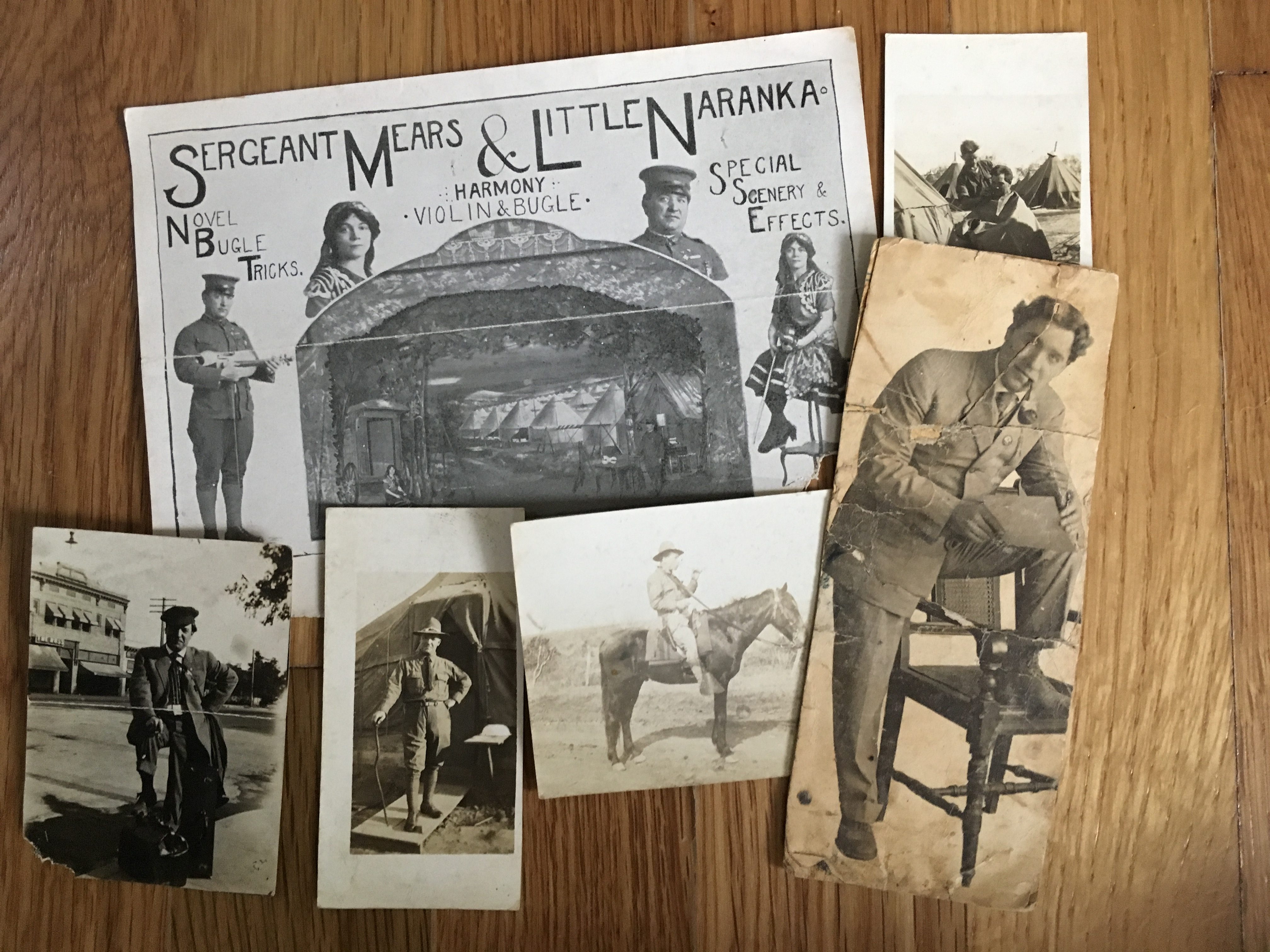
The New York Times added an opinion section called What I Got Wrong. A variety of OpEd authors are revisiting past articles with a new lens and taking responsibility for the things they got wrong. This is showing up and growing up, again. Showing up can be “shaking off the morning gremlins attached to your ankles, fear and lethargy” (a good friend rephrased this from a James Hollis book), showing up again is taking the time to circle back. Whether it’s to be accountable to others or yourself, it’s an important part of growing up.
My gremlins don’t prefer morning and I will argue that I only have one, fear. However, fear can turn into lethargy, Britt Frank would call this parasympathetic anxiety. When I have laser lock on something novel and exciting, my energy shoots to the sky just before it falls to the ground due to what I call the paralysis of enormity. Middlescence is inviting me to be patient, the engineer in me is requiring me to organize, my examined life brain suggests a deeper look. These integrated aspects have allowed me to slow down and review my present choices and intentions and ask Why do I want to do this? What is keeping me here? What is making me want to leave? Sitting down to have tea (Tara Brach) with fear makes it is easier to release those stuck points and alchemize them into opportunity. My daily mantra: Follow the energy and keep showing up in the present moment.
Almost 10 years ago while earning a master’s in Education, I worked with a professor on her project to find out “Where the Boys are” in K-12 education and why they were underperforming. We quickly understood that “where” was less important than “why” and we shifted our inquiry. The research led us to a new discovery, “Voices of Whiteness and Voices of Diversity – Blending the Tone in a Survey”. Fast forward ten years, our culture and society seem to have changed or at least begun to change and I want to revisit what we got wrong. Three jobs and three laptops later I was finally able to track down a version of our paper. I can’t wait to dig in with my new lens. What did Critical Race theory mean to me then while investigating the education of brown and black boys? What does it mean now in our fractured culture? Did what I said back then cause harm? Do I need to reengage with those I may have hurt? I’m thrilled to see individuals and entities (NYT) put time into revisiting their words and actions and I intend to participate in the movement.
Showing up is critical for growing up. As a society we don’t stop, we don’t process, we don’t digest and as a result we are lost, confused, and can no longer see beyond what we think are our own truths. What can we show up for again? What conversation can be revisited? What friendship deserves another shot? My desire to fix what I’ve broken, to be accountable and responsible is what I most want to show up for. It’s hard work, it takes time and requires creativity to allow for the unique responses of others. Imagine the social discourse we could elevate and the problems we could solve if this type of introspection, these expectations were a part of our education system and workplace.
Great Read: Living an Examined Life by James Hollis, PhD
Quote of the Day: “On the inside we come to know who and what and how we love and what we can do to deepen that love; only from the outside, and only by looking back, does it look like courage.” -David Whyte, Consolations
-
Blog 1 – open position
Blog 1:
Social Media Accountability
ActivistManager:If I could be anything right now, this is what I would be. I would design an accountability group to drive companies to manage the negative effects of their businesses. The first one I would tackle is social media platforms. What harm have they done? How can they reverse the effects of this? I’m not talking about removing the “like” button or installing a “watch my time on-line” function.
About ten years ago, I thought amazon should host an “altruistic Alexa”, that could have been a more wholistic approach. Left unchecked for so long, today we need real reparations. I would take all that data they alchemize (and sell) to help us become more efficient and repurpose it to capture the emotional harm they’ve caused our children (increased teen depression and suicide to name a few) and the political division that’s been fueled. Then, I would help them to invest in the root of the problem… education, health and wellness of the individual. It’s not about cancelling anyone; it’s about strengthening the necessary parts of humanity to be better digesters. The question I have is, should the companies oversee reversing the effects under their own roof? Or should they be required to invest in our infrastructure and/or provide service and research for support? Perhaps it’s a blend. I’m a proponent of infrastructure. Whether you like it or not, we need it. However, it needs to function with wisdom. Those who run our infrastructure and work it need to also be good digesters and have the right intentions – for the better of the people. I understand this is very nuanced and difficult because we are so diverse as a people. But are we really?
Private social media companies have so much power and no accountability. If you kill someone, you should be held accountable. Recently, TikTok hosted and is responsible for a challenge that killed two minors. Whose responsibility is this? The parent? Government? How about the company itself, wouldn’t that be more mature? You act poorly, you hurt others, you have a consequence, a chance to redeem yourself and a way to make sure this never happens again.
I can be quixotic and there is no panacea, but action is required.
Here are a few current good reads (there are endless others) on the subject that indicate some reasons why and how these platforms can become such bad actors. (If you haven’t watched Social Dilemma that is a mandatory starting point).
TikTok and its influencers have a secret sponsored content problem – Vox
We can all become bad actors, but as humans we have the ability and the responsibility to help fix the harm we’ve done.
Quote of the day:
Impermanence is not just something gone- it’s transformation and there’s creativity in it. Awareness and consciousness are ceaselessly responding. We can play a little more, but it doesn’t mean there are no consequences or that it doesn’t matter. It all matters because everything is responding.
-Me (with the insight of many others)
Credit to Mark Nepo for the title of my website. He told a beautiful story and shared his poem called The Second Half during an MEA course. We are all training for the heron and we might not even know it.
From Ian Bremmer’s newsletter: I find this noteworthy progress.
Social media companies are responsible for the decline in mental health among youth and should be held accountable accordingly.
In a perfect world, they would:
1. Warn users about the dangers their products pose and ask for informed consent
2. Stop marketing/advertising social media to kids and teens and restrict access to 18+ or 21+, just like tobacco and alcohol
3. Fund youth prevention and education programs
4. Pay for damages if they’re found to be legally negligent
(A human can dream…)
training for the heron
Integration Station
 training for the heron
Leave a comment